Create Your Own Ecommerce Platform in India with LALA MyStore
Build a storefront that fits how Indian customers shop — UPI, COD, GST invoicing and mobile-first checkout. Start selling online without paying for a platform upfront.

- No coding needed
- UPI, card & COD
- GST invoices
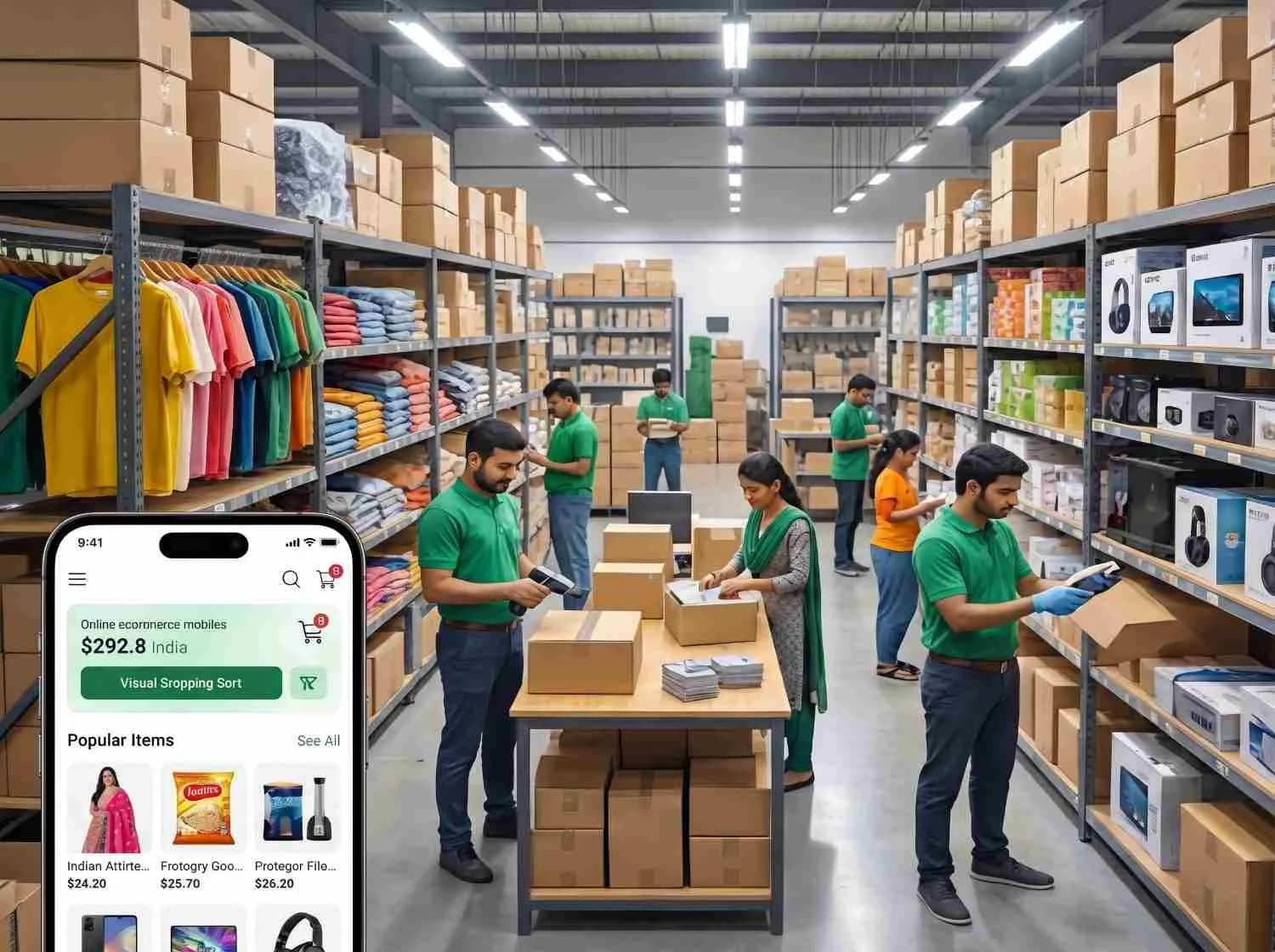
Why Ecommerce Platform India Owners Need an Online Store
Creating an ecommerce platform in India means more than putting products on a website. Indian customers expect UPI, cash on delivery and a checkout that works on their phone, and Indian sellers need GST invoicing and local delivery options that global templates often miss.
LALA MyStore gives you a free starting point to build an India-ready store: upload your catalogue, set up UPI and COD, generate GST invoices and manage orders from one dashboard.
Setting up is a phased process. Get your business basics in place, prepare your product data carefully, connect your payment gateway early, and set up shipping before you launch.
Beyond your own store, India offers additional channels like ONDC, where you can list once and be discoverable across multiple buyer apps, and the MSME TEAM Initiative for structured onboarding support.
Whether you are testing online selling for the first time or adding a direct channel to an existing business, the right platform is the one that handles the Indian essentials well and grows with you.
The problem
Global ecommerce templates don't support UPI and COD the way Indian customers expect.
The fix
LALA MyStore supports UPI, cards and cash on delivery, with COD controls so you can set which orders qualify.
The problem
GST invoicing and HSN codes are an afterthought on many platforms.
The fix
Generate GST invoices through LALA Invoice with product tax details configured correctly from the start.
The problem
You are not sure whether to build your own store, join ONDC or sell on marketplaces.
The fix
Start with your own store to own the customer relationship, then add ONDC or marketplaces as additional channels once your operations are stable.
Features for Ecommerce Platform India Owners
India-ready storefront
Build a mobile-first store that supports UPI, COD and GST invoicing.
Local payment methods
Accept UPI, cards, net banking and cash on delivery depending on your customers.
Learn more about local payment methodsGST invoicing
Generate GST invoices with correct HSN codes for every order.
Learn more about gst invoicingBulk product upload
Upload your catalogue from Excel and prepare product data with HSN codes and weights.
Learn more about bulk product uploadDelivery and COD controls
Set delivery areas and COD rules based on your operations.
Learn more about delivery and cod controlsONDC-ready operations
Prepare your catalogue and operations to join ONDC through a seller app when you are ready.
Manage Ecommerce Platform India Products and Categories
Set up your store with your business details and logo, upload your catalogue from Excel with HSN codes and weights, configure UPI and COD payment options, set your delivery areas and COD rules, and connect a shipping aggregator for PIN code serviceability and tracking. Manage orders, customers and reports from one dashboard.
- Bulk upload from Excel
- Categories and sub-categories
- Stock tracking per product
- MRP and offer price
- Product specifications
- HSN code and GST rate
- Units like kg, litre, piece or metre
- Active, draft and archived status
What Indian sellers list on LALA MyStore
- Grocery and daily essentials
- Fashion and apparel
- Beauty and personal care
- Home and furniture
- Electronics and accessories
- Handmade and home-based products
- D2C brand products
- Services and consultations
- Digital products and courses
- Seasonal and festival collections
- Gift sets and combos
- Subscription products
Reach More Customers Online
India's online retail growth is being driven by everyday categories — grocery grew 53% and 51% in the last two halves and is set to overtake mobiles as the second-largest online category [citation:4]. The right platform helps you capture demand in these high-frequency categories without over-investing in infrastructure before you have validated demand.
- Share your store link on WhatsApp and Instagram where Indian customers already spend time
- Print your QR code on packaging and shop signage so offline customers can reorder online
- Consider joining ONDC through a seller app to be discoverable across multiple buyer apps [citation:11]
Your own store link
Every store gets its own web address to share anywhere.
Store QR code
Customers scan at your counter, on bills or on posters to open your store.
WhatsApp & social media
Share products and offers on WhatsApp, Instagram and Facebook.
Google search & custom domain
Set your store's SEO details and use your own domain name.
How to Create Your Ecommerce Platform India with LALA MyStore
Step 1
Sign up and name your store
Create your free LALA MyStore account and add your ecommerce platform india's name, logo, address and contact details.
Step 2
Choose a store template
Pick a design that suits your ecommerce platform india and add your banner and cover photos.
Step 3
Add your products
Upload your ecommerce platform india products from Excel or add them one by one, with prices, stock, photos and categories.
Step 4
Set up payments and delivery
Turn on UPI, card and cash on delivery, add your GST details and decide where you deliver.
Step 5
Share and start selling
Share your store link and QR code on WhatsApp, Instagram and at your counter, and manage orders from your dashboard.
Everything You Need to Know About Selling Online
Create an ecommerce platform in India with LALA MyStore and build a storefront that fits how Indian customers actually shop. India's online retail market is projected to cross US$90 billion in 2026, growing 22–24% year-on-year, with grocery, beauty and personal care, and home and furniture accounting for roughly three-fifths of the incremental GMV added this year [citation:4][citation:8]. Whether you run a retail shop, a D2C brand or a home-based business, the right platform should support the payment methods, delivery expectations and compliance requirements that Indian sellers face — not just a generic global template.
An India-ready ecommerce platform needs local payment depth: UPI, cards, net banking, wallets and cash on delivery, with a gateway that settles reliably in India [citation:1]. It needs GST invoicing built in, because most ecommerce sellers need GST registration and correct HSN codes on every invoice [citation:2][citation:6]. It needs COD controls so you can set which PIN codes and order values qualify, because COD remains a major payment method for Indian shoppers [citation:1]. And it needs a mobile-first checkout, because most Indian shoppers buy on their phones and a clunky checkout wastes every rupee spent on ads [citation:1]. A platform that gets these basics right is worth more than one with a longer feature list.
Setting up your ecommerce platform is a phased process, not a single step. Start with your business foundations — business registration, GST where applicable, and a bank account for settlements [citation:2][citation:6]. Then choose your platform and design your store mobile-first. Prepare your product data carefully: titles, descriptions, photos from multiple angles, prices with GST treatment, HSN codes, variants and weights [citation:6]. Set up your payment gateway early because KYC and activation take time, and configure your COD policy before launch [citation:6]. Finally, connect a shipping aggregator so you can check PIN code serviceability, print labels and track shipments from one dashboard [citation:6]. LALA MyStore is free to start, so you can test online selling while you work through these steps without adding platform costs.
India has a growing set of options beyond building alone. The government-backed ONDC network lets you list once and be discoverable across multiple buyer apps like Paytm, PhonePe and Magicpin, with no fee to join ONDC itself — you join through a seller app [citation:11]. The MSME TEAM Initiative provides structured onboarding support for micro and small enterprises, including catalogue creation and ONDC integration, with an allocation of ₹277.35 crore for 2024–2027 [citation:7]. And if you sell on marketplaces alongside your own store, look for a platform that keeps your catalogue and orders connected rather than forcing you to manage separate systems. Your own store is where you own the customer relationship; ONDC and marketplaces are additional channels, not replacements.
For business owners comparing platforms, the right ecommerce platform in India is the one that fits your stage and grows with you. If you are testing online selling for the first time, a free builder like LALA MyStore lets you start without upfront risk. If you are a scaled D2C brand, a managed platform with a mature India-specific app ecosystem may reduce operational drag. If you need deep customisation, a self-hosted option gives you control at a different cost structure. The common thread is that the platform must handle UPI, COD, GST and mobile checkout well — because those are the realities of selling online in India, regardless of which platform you choose.
Frequently Asked Questions
How do I create an ecommerce platform in India with LALA MyStore?
Set up your store, add your business details and logo, upload your catalogue from Excel, configure UPI and COD payment options, and set your delivery areas. No coding or technical staff is required.
Does LALA MyStore support UPI and cash on delivery?
Yes. You can accept UPI, cards and cash on delivery, depending on the payment options enabled for your store and what your customers prefer [citation:1].
Can I generate GST invoices for my orders?
Yes. LALA MyStore supports GST invoicing through LALA Invoice. Configure the correct HSN codes and tax rates so invoices reflect the appropriate GST treatment [citation:2].
Do I need GST registration to sell online in India?
GST requirements depend on your turnover and the products you sell. Most ecommerce sellers need GST registration, especially if selling through marketplaces. Consult a tax professional for your specific situation [citation:2].
What is ONDC and should I join it?
ONDC is a government-backed open network that lets you list once and be discoverable across multiple buyer apps like Paytm and PhonePe. There is no fee to join ONDC itself; you join through a seller app. It is an additional channel alongside your own store [citation:11].
How do I set up shipping for my online store?
Most new stores use a shipping aggregator to access multiple courier partners, check PIN code serviceability, print labels and track shipments from one dashboard [citation:6].
Can I set COD rules for my store?
Yes. You can decide which PIN codes and order values qualify for cash on delivery, and whether COD orders are confirmed before dispatch [citation:6].
Is LALA MyStore free to start?
You can set up your store and start listing products without paying for a platform upfront. Check the pricing page for details about what is included in the free offering and what paid features are available as you grow.
What product data should I prepare before launching?
Prepare titles, descriptions, photos from multiple angles, prices with GST treatment, HSN codes, variants (size, colour) and weights for each product. This data takes longer than most sellers expect, so start early [citation:6].
What government support is available for small businesses going online?
The MSME TEAM Initiative provides structured onboarding support for micro and small enterprises, including catalogue creation and ONDC integration, under the RAMP scheme with an allocation of ₹277.35 crore for 2024–2027 [citation:7].
Solutions for other businesses
Online store for best ecommerce platforms
Find the best ecommerce platform in India for your business. Compare marketplaces, Shopify, WooCommerce and free builders like LALA MyStore based on stage, budget and needs.
Online store for online store for businesss
Create an online store for your business with LALA MyStore. List products or services, accept UPI and COD payments, manage orders and start selling online without upfront costs.
Online store for multi-store ecommerce managements
Manage multiple stores, warehouses and sales channels from one dashboard. Centralise your catalogue, sync inventory, process orders and grow your retail network with LALA MyStore.
Ready to take your ecommerce platform india online?
Build your branded online store, accept payments and send GST invoices — all from one dashboard.