Find the Best Ecommerce Platform for Your Business in India
Compare marketplaces, Shopify, WooCommerce and free builders based on your business stage, budget and how you actually sell — then choose the one your team can run.

- No coding needed
- UPI, card & COD
- GST invoices
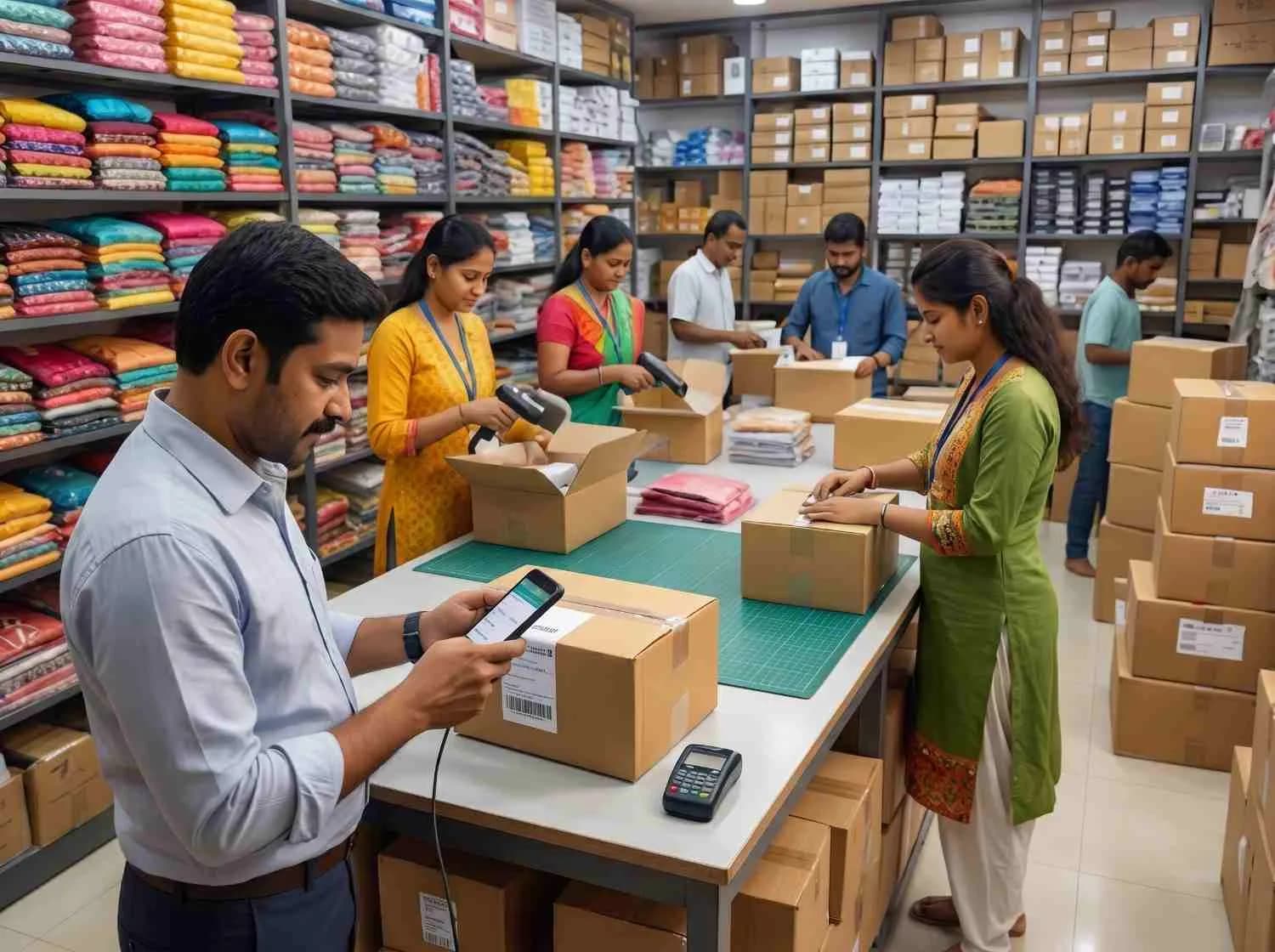
Why Best Ecommerce Platform Owners Need an Online Store
Choosing an ecommerce platform is one of the first decisions that shapes how your online business operates. The right platform fits your stage, budget and technical comfort; the wrong one adds cost and friction before you have made your first sale.
This page compares the main options available to Indian sellers — marketplaces, self-hosted platforms, managed SaaS and free builders — so you can decide based on how you actually sell, not on which brand advertises the loudest.
For retail shops with a physical presence, the priority is connecting counter sales and online orders in one system. For D2C brands, the priority is control over checkout, data and customer relationships.
If you are testing online selling for the first time, a free builder lets you start without upfront cost. If you are scaling, a managed platform with a mature India-specific app ecosystem reduces operational drag.
The best platform is the one that fits your business today and can grow with it tomorrow — without locking you into costs or complexity you cannot manage.
The problem
Every platform claims to be the best, but the right choice depends on your business stage.
The fix
Compare options by stage, budget and technical resourcing rather than brand recognition alone.
The problem
Marketplaces bring traffic but charge commissions and restrict customer data.
The fix
Use marketplaces to test demand, then build your own branded store where you own the customer relationship.
The problem
Self-hosted platforms look cheap upfront but require ongoing maintenance.
The fix
Factor in hosting, security and developer time when comparing WooCommerce against managed SaaS options.
Features for Best Ecommerce Platform Owners
Free to start
Begin selling online without upfront website costs and upgrade when orders justify it.
Bulk product upload
Upload your catalogue from Excel instead of adding products one by one.
Learn more about bulk product uploadCategory organisation
Group products into categories that mirror how your customers shop.
GST invoicing
Generate GST invoices for every order through LALA Invoice.
Learn more about gst invoicingUPI & card payments
Accept UPI, cards or cash on delivery depending on your customers.
Learn more about upi & card paymentsDelivery or pickup
Offer home delivery, store pickup or both based on your operations.
Learn more about delivery or pickupManage Best Ecommerce Platform Products and Categories
When evaluating platforms, compare how each handles the tasks you will do every week: uploading products, updating prices and stock, processing orders, generating GST invoices and managing delivery. A platform that simplifies these daily operations saves more time than one with a longer feature list you will never use.
- Bulk upload from Excel
- Categories and sub-categories
- Stock tracking per product
- MRP and offer price
- Product specifications
- HSN code and GST rate
- Units like kg, litre, piece or metre
- Active, draft and archived status
Platform options for Indian sellers
- Marketplaces (Amazon, Flipkart)
- Managed SaaS (Shopify)
- Self-hosted (WooCommerce)
- Free builders (LALA MyStore)
- Social commerce (Instagram, WhatsApp)
- Quick-commerce platforms
- ONDC networks
- Custom/headless builds
Reach More Customers Online
India's online retail growth is being driven by everyday categories — grocery grew 53% and 51% in the last two halves and is set to overtake mobiles as the second-largest online category [citation:2]. The right platform helps you capture demand in these high-frequency categories without over-investing in infrastructure before you have validated demand.
- Start with a free builder to test whether online ordering works for your customers
- Use marketplaces to validate demand, then migrate loyal customers to your own branded store
- Run the cost math at three times your current GMV before committing to a paid platform
Your own store link
Every store gets its own web address to share anywhere.
Store QR code
Customers scan at your counter, on bills or on posters to open your store.
WhatsApp & social media
Share products and offers on WhatsApp, Instagram and Facebook.
Google search & custom domain
Set your store's SEO details and use your own domain name.
How to Create Your Best Ecommerce Platform with LALA MyStore
Step 1
Sign up and name your store
Create your free LALA MyStore account and add your best ecommerce platform's name, logo, address and contact details.
Step 2
Choose a store template
Pick a design that suits your best ecommerce platform and add your banner and cover photos.
Step 3
Add your products
Upload your best ecommerce platform products from Excel or add them one by one, with prices, stock, photos and categories.
Step 4
Set up payments and delivery
Turn on UPI, card and cash on delivery, add your GST details and decide where you deliver.
Step 5
Share and start selling
Share your store link and QR code on WhatsApp, Instagram and at your counter, and manage orders from your dashboard.
Everything You Need to Know About Selling Online
Finding the best ecommerce platform in India depends less on brand recognition and more on your business stage, budget and technical resourcing. India's online retail market is projected to cross USD 90 billion in 2026, growing 22–24% year-on-year, with grocery, beauty and personal care, and home and furniture driving nearly three-fifths of the incremental GMV [citation:2][citation:5]. Whether you run a kirana shop, a garment store, a D2C brand or a multi-category retail business, the right platform should match how you actually sell — not force you into a template built for someone else.
The Indian ecommerce platform landscape spans several models, each suited to different needs. Marketplaces like Amazon and Flipkart offer traffic and trust but charge referral fees of 6–25% and restrict customer data access [citation:12][citation:6]. Self-hosted platforms like WooCommerce give you full control but require paid hosting, security maintenance and developer time — real costs that first-time founders often underestimate [citation:11]. Managed SaaS platforms like Shopify bundle hosting, security and checkout, with plans starting around ₹1,499 per month before GST, plus a third-party transaction fee because Shopify Payments is not available in India [citation:11]. Free and low-cost builders like LALA MyStore let small shops start selling without upfront website costs, which matters most for businesses testing online selling for the first time.
For retail shops with a physical presence — grocery stores, garment shops, electronics dealers, hardware stores — the best platform is often the one that connects your counter sales and online orders without adding operational complexity. You need a shared product catalogue, synced stock, GST invoicing and the ability to offer delivery or store pickup. Platforms that treat your shop and website as separate systems create double work: prices drift out of sync, stock counts mismatch, and your team ends up maintaining two catalogues. Look for a platform that lets you upload products once from Excel, update stock in one place and manage both channels from a single dashboard.
For D2C brands and online-first sellers, the decision often comes down to control versus convenience. Shopify is the default for meaningful-revenue Indian D2C brands, with a mature app ecosystem for COD, RTO reduction, GST invoicing and logistics integrations — boAt, Mamaearth and Minimalist all run on Shopify, and SUGAR Cosmetics uses Shopify Plus [citation:15]. WooCommerce remains the better choice for content-heavy or highly custom builds where you need full control over code and data [citation:9]. The honest trade-off: Shopify's monthly cost scales with revenue, while a well-run WooCommerce store costs more in developer hours but less in platform fees at high volume [citation:15]. Run the numbers at three times your current GMV, not today's.
The best ecommerce platform in India is the one that fits your business today and can grow with it tomorrow. If you are a small shop owner testing online selling, a free or low-cost builder like LALA MyStore lets you start without risk and upgrade when orders justify it. If you are a funded D2C brand scaling nationally, Shopify's ecosystem reduces operational drag on COD-heavy Indian checkout [citation:15]. If you need deep customisation or already have WordPress expertise, WooCommerce gives you ownership at a different cost structure [citation:11]. The platform that works is the one your team can actually run — not the one with the longest feature list.
Frequently Asked Questions
What is the best ecommerce platform in India for small shops?
For small shops testing online selling, a free or low-cost builder like LALA MyStore lets you start without upfront website costs. As orders grow, you can upgrade based on your needs.
Is Shopify better than WooCommerce for Indian businesses?
Shopify is the default for meaningful-revenue Indian D2C brands because of its mature COD, RTO and GST app ecosystem. WooCommerce is better for content-heavy or highly custom builds where you need full control. The right choice depends on your technical resourcing and budget [citation:9][citation:11].
Should I sell on Amazon or build my own website?
Marketplaces offer traffic and trust but charge referral fees of 6–25% and restrict customer data. Your own website gives you full control, customer data and higher long-term margins, but you must drive your own traffic. Many businesses use both [citation:6][citation:12].
How much does it cost to start selling online in India?
Costs vary widely. A free builder costs nothing upfront. Shopify plans start around ₹1,499 per month before GST, plus transaction fees. WooCommerce is free as a plugin but requires paid hosting, security and developer time [citation:11].
Do I need GST registration to sell online?
GST requirements depend on your turnover and the products you sell. Consult a tax professional for your specific situation. Platforms like LALA MyStore support GST invoicing when you are registered.
Can I connect my physical shop to my online store?
Yes. LALA MyStore lets you manage counter sales and online orders from one dashboard with a shared product catalogue and synced stock.
What is the fastest platform to launch an online store?
Managed SaaS platforms like Shopify and free builders like LALA MyStore are fastest to launch because they handle hosting, security and checkout for you. Self-hosted platforms require more setup time [citation:11].
Can I migrate from one platform to another later?
Yes, migration is possible in either direction, but it is not a weekend job. Plan for it if you expect significant growth or changes in your technical needs [citation:15].
What categories are growing fastest in Indian ecommerce?
Grocery, beauty and personal care, and home and furniture are the fastest-growing categories in 2026, accounting for about 40% of online retail GMV and roughly three-fifths of incremental GMV [citation:2][citation:5].
Is a free ecommerce platform reliable enough for my business?
A free platform lets you start without risk and test whether online selling works for your customers. As your order volume grows, you can upgrade to a paid plan with more features.
Solutions for other businesses
Online store for grocery store websites
Create a grocery store website with LALA MyStore. List your products, take orders for home delivery or pickup, accept UPI and manage your grocery business online.
Online store for free online book stores
Create an online book store for free with LALA MyStore. List books, upload your catalogue from Excel, accept orders and start selling to readers without upfront website costs.
Online store for omnichannel retail platforms
Run your shop and online store as one business with LALA MyStore's omnichannel retail ecommerce platform. Sync products, stock, orders and customers in one dashboard.
Ready to take your best ecommerce platform online?
Build your branded online store, accept payments and send GST invoices — all from one dashboard.